
Custom Home Builders
Gilley's Custom Home BuildersResidential Home Builder
Gillley’s Custom Residential Home Builders
Building Dream Houses
Gilley’s Custom Homes are custom Residential home builders and remodeling working in Florida for over 20 years and are considered as one of the best custom home builders in the area. Our commitment to designing dream houses and providing quality construction well within the client’s budget makes us one of the best home builders in the area. Our budget-custom design-build process guarantees client satisfaction and allows us to complete the project within the allocated time. Regardless of the size and complexity of your future home, you can rely on us for all your project needs.
Why Us?
As the leading custom residential home builder in the area, we give our 100% to every single project, regardless of the size. We dedicate a builder for every project who is available to solve any unexpected problems and oversee the construction or remodeling process. We take pride in providing top of the line craftsmanship, finishing the project on time while maintaining the cost-effectiveness of the project.
Honest
Building or renovating your home is among the biggest investments you’ll ever make; we understand that and honestly share all the details with you. From project time to project pricing, we’ll clearly communicate every aspect of the project with you, throughout the project. Not only that, but we also value your thoughts and ideas about the project, so we highly recommend that you tell us about your needs too.
Reliable
Our designers and residential home builders focus on value and strive to build stylish houses with efficiency. The houses we have built are proof of our quality and showcase excellent design and livability. We can improve the quality of your home by remodeling or build a new one from scratch.
Affordable
We are well known for being an affordable custom home builder; we make a rough estimate of your budget before we begin designing your home, we then design your home according to your budget and finalize the budget, making sure that we stay as close to the rough estimate as possible. This way, we are able to provide our clients with the best home building services at an affordable price.
Fast Responses
We always have a team on standby waiting for your call. Within hours of your call, we’ll be there to assists you as your residential home builder. Even after the project is complete, you can give us a call without hesitation, and we’ll be there for you.
Satisfaction Guaranteed
We believe that every person is creative, and as we want to build your dream house, we carefully listen to your thoughts and creative ideas. Our designers design the home based on your ideas. Personalize it according to your requirements, and our residential home builder executes the design making sure that you get an even better version of what you need.
A Home Builder You Can Trust
What We Do
Residential Construction
Gilley’s Custom Residential Home Builders provides exceptional residential home building services to the residents of Florida’s Charlotte & Sarasota Counties. From luxury homes to small houses, we are here to build your dream house.
Residential Remodeling
Residents of Florida’s Charlotte & Sarasota Counties can rely on us to provide remodeling services for their homes. We guarantee that we’ll surpass all your expectations about the design and quality.
How We Do It
Our custom home building and remodeling process starts with a rough estimate of your budget and comprises the following steps.
Designing
After getting a rough estimate of your budget, our designers start designing your home as per your vision.
Budgeting
Once the design is finalized, we create a final budget for you after factoring in the material required by the job and try to keep the final budget as close as possible to the rough estimate.
Building
Once the design and budget are finalized, our team will start construction on your home. A builder is always available on-site to solve any unexpected issues, to guide the team executing the design, and to answer all your questions and concerns.
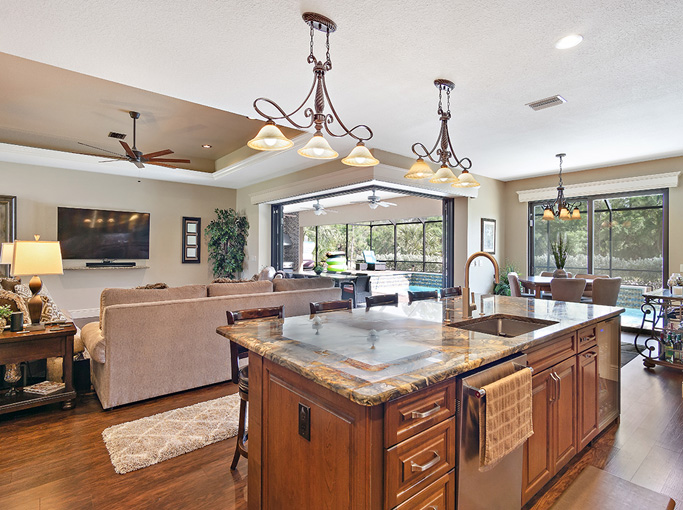
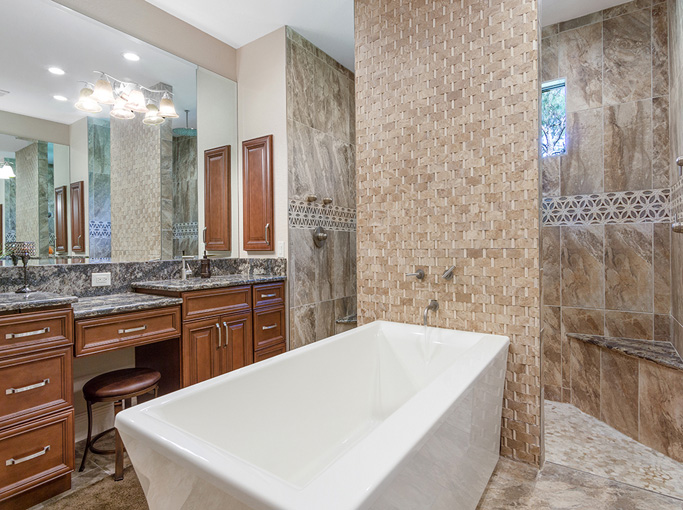
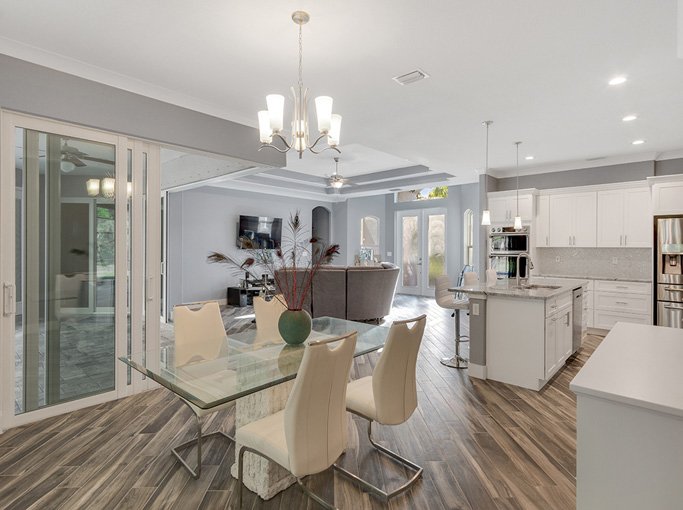
Take A Look At Our Work
View our gallery to find inspiration for the design of your new home and to see our quality of work.
We Do More Than Build Homes!
Looking for custom pool builders in your area? Look no further! Gilley’s Custom Pool Builders division is ready to make your outdoor living dreams come true!
Start Building your custom pool today!
Swimming Pool Builders in North Port | Swimming Pool Builders in Port Charlotte | Swimming Pool Builders in Punta Gorda
Locations We Serve
As one of the most experienced custom home builders and remodeling, we proudly provide home building services in Florida.
North Port
The largest city in Sarasota County, North Port, is located in Southwest Florida on the Gulf Coast. As one of the best home builders in Florida, we have a dedicated team of experienced Residential home builders in North Port and designers that understand the city and what works best in it.
Port Charlotte
Listed in the Forbes 25 Best Places to Retire list, Port Charlotte is an unincorporated community in Florida’s Charlotte County. Homeowners in this area can rely on us to get a residential home builder in Port Charlotte for their homes in this area. From small homes to luxury villas, we can provide you with experienced designers and builders for remodeling or constructing your home.
Charlotte County
Charlotte County is among the best counties to live in Florida, so understandably, you might be looking to build a home here. Give us a call, and we’ll help you build your dream house by providing the best residential home builders in Charlotte County from our company. We can also help you renovate or remodel your home according to your budget and requirements in Florida’s Charlotte County.
Sarasota County
Located on the Gulf Coast in Southwest Florida, Sarasota County is among the most beautiful places to live in Florida. If you are planning to build a new house or remodel your current one in this area, then we suggest that you give us at least one call to get a rough estimate. We promise that you are going to be thankful that you called us because we are local and experienced residential home builders in Sarasota County who work hard to satisfy our clients.
Client Testimonials
See what our clients have to say about us
These guys build my friend’s house and did an exceptional job, so a few months later, when we decided to remodel our home, so we contacted Gilley. The fast response was shocking for us as their team members were at our doorstep within hours. As expected, they did a great job remodeling our home and finished the project within the dedicated time and budget. 5 stars!
I’m not going to say much, just that if you bring up remodeling or construction in a conversation, I’m going to give you their contact information; that’s how good they are.
We were looking to buy land in Charlotte and were driving around a neighborhood where we saw a home their team was working on. We loved the design of the house so much that we stopped the car and went to talk to their team; their builder was on-site and even knew our realtor. Long story short, after we bought the land, we hired Gilley’s team for the construction, and as expected, they did an exceptional job. Highly recommended!
About Gilley Custom Home Builders
Gilley Custom Home Builders has been providing home building and renovation services in Charlotte and Sarasota Counties in Florida for more than 20 years. Even after becoming a veteran of the industry, we work on every project we get, regardless of its size, with the same “first-project-like” dedication. As a result of our dedication, we are considered as one of the best home building and remodeling company in Florida.
Let’s Talk
Ready to build or remodel your home? Have any questions? Feel free to contact us.
Email: info@gilleycustomhomes.com
Phone: 941-426-6542